Understanding Aluminum Metal Casting: High-Quality Robust Parts for Industry and Manufacturing
Aluminum metal casting holds a vital position in modern manufacturing. It offers manufacturers the ability to create robust, lightweight components that can improve overall product performance. Various techniques, from sand to die casting, provide design flexibility and precision. Understanding the nuances of alloy selection and production processes can substantially impact the results. As industries develop, so do the difficulties and innovations in aluminum casting. What approaches can enhance efficiency and quality in this essential process?
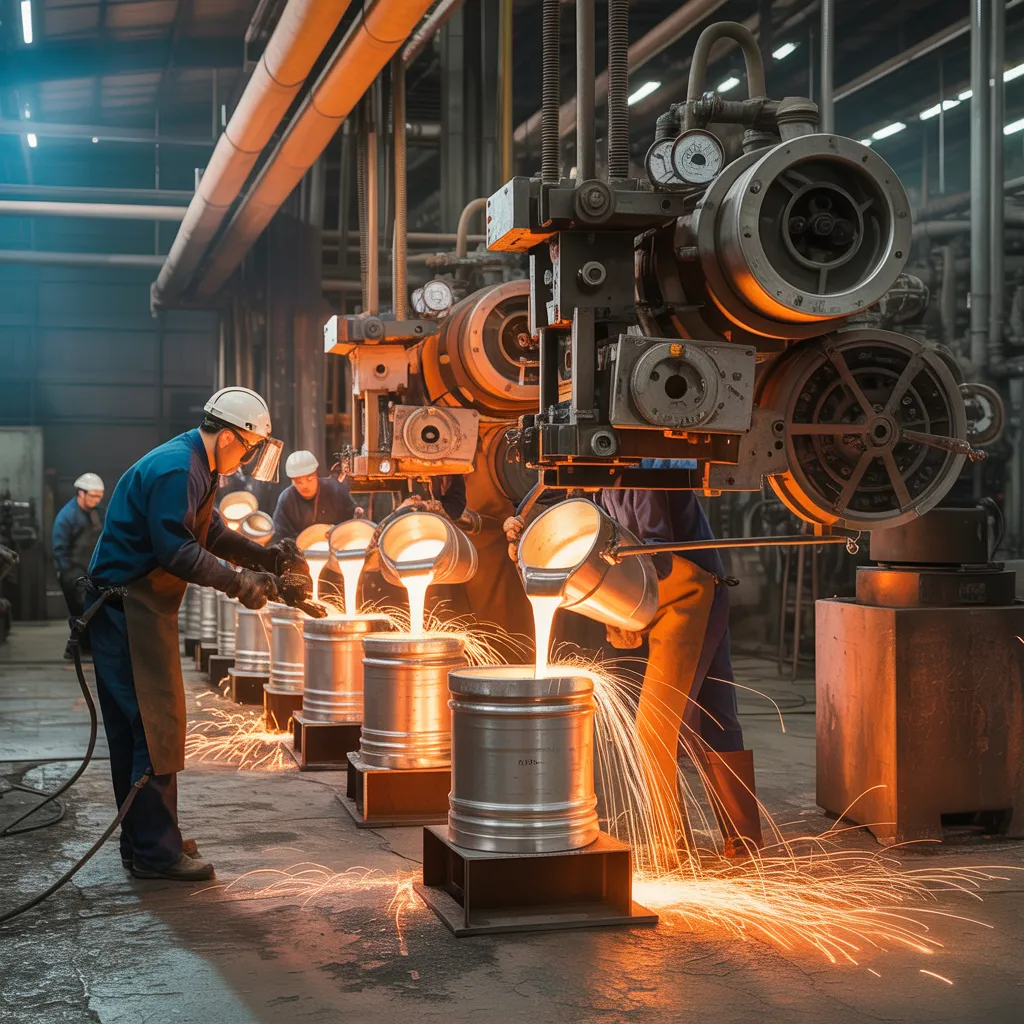
Why Aluminum Casting Benefits Your Manufacturing Process
The process of aluminum casting delivers multiple advantages that can substantially optimize the manufacturing process. Its lightweight nature enables the production of parts that are simpler to manage and move, thereby reducing operational costs. Furthermore, aluminum provides exceptional corrosion resistance, prolonging the lifespan of components in multiple environments. The excellent thermal and electrical conductivity of aluminum makes it perfect for applications in automotive and electronic manufacturing, where thermal management is critical.
Furthermore, aluminum can be effortlessly molded into complex shapes, allowing for intricate designs that satisfy specific engineering needs. The process also enables reduced tooling costs and shorter lead times, which is crucial in today's fast-paced market. In addition, the recyclability of aluminum promotes sustainability efforts, making it an environmentally friendly choice. In summary, these features position aluminum casting as a valuable technique that can substantially boost efficiency and product quality in manufacturing.
Standard Processes Applied in Aluminum Metal Casting
Aluminum metal casting employs multiple techniques that meet varied manufacturing demands. Two prevalent methods are sand casting and die casting, each offering specific advantages and applications. Knowledge of these processes is vital for improving production effectiveness and achieving desired final products.
Sand Casting Methods
A range of sand casting approaches are widely applied in the aluminum metal casting process, all offering unique strengths depending on the project's requirements. The most common technique is green sand casting, which utilizes a mixture of sand, clay, and water. This method offers excellent moldability and is cost-effective for small to medium production runs. Another technique, referred to as resin sand casting, adds resin into the sand mixture, enhancing the mold's strength and surface finish. Furthermore, shell molding requires creating a thin shell of sand and resin around a pattern, facilitating better dimensional accuracy and smoother surfaces. Each technique is picked based on factors such as production volume, complexity of the part, and desired finish quality.
Die Casting Methods
Various die casting approaches are employed in the aluminum metal casting industry, each customized to meet specific production demands and design complexities. The two primary approaches are hot chamber and cold chamber die casting. Hot chamber die casting is appropriate for low-melting-point metals and enables for rapid production cycles, making it efficient for high-volume manufacturing. Alternatively, cold chamber die casting is ideal for aluminum and other high-melting-point alloys; it entails injecting molten metal into cold molds, ensuring greater control over the metal's properties. In addition, pressure die casting guarantees uniformity and precision in the final product, while vacuum die casting limits gas entrapment, increasing part integrity. Each approach offers distinct advantages, making them important for diverse industrial applications.
Choosing the Correct Aluminum Alloys for Casting
Selecting the right aluminum alloy for casting is essential, as alloy composition directly influences the final product's attributes. Alignment with the chosen casting process also plays a major role in achieving desired outcomes. Moreover, understanding the mechanical properties of different alloys can guide decision-making to meet specific application requirements.
Alloy Composition Matters
Picking the right aluminum alloy is essential for attaining ideal performance in casting applications. The composition of aluminum alloys significantly influences their mechanical properties, corrosion resistance, and thermal conductivity. Standard alloying elements, such as silicon, copper, and magnesium, are added to improve certain characteristics like strength and ductility. For instance, silicon improves fluidity, making it perfect for intricate castings, while magnesium increases strength, making alloys appropriate for structural components. Understanding the composition permits manufacturers to choose alloys that fulfill the specific needs of the application, whether it be for automotive parts or industrial machinery. Finally, the right alloy composition not only ensures durability but also optimizes production efficiency and cost-effectiveness in the casting process.
Casting Method Compatibility
Grasping alloy composition is only one element of enhancing aluminum casting; the compatibility of the chosen alloy with specific casting processes is just as important. Different casting techniques, such as sand casting, die casting, and permanent mold casting, necessitate distinct alloy properties to achieve ideal results. For example, die casting often works best with alloys with lower melting points and exceptional fluidity, while sand casting may use alloys that exhibit strong strength and ductility. Furthermore, the thermal and mechanical attributes of the alloy must correspond to the requirements of the selected process to prevent defects and maintain dimensional accuracy. Finally, selecting the right aluminum alloy based on casting process compatibility is critical for producing high-quality, durable components tailored to industry needs.
Overview of Mechanical Properties
Aluminum alloys' mechanical properties serve a vital function in establishing their appropriateness for diverse casting uses. These attributes, featuring tensile strength, ductility, hardness, and fatigue resistance, are key determinants in picking the correct alloy for specialized industrial demands. Alloys such as 356 and 319 enjoy preference for their exceptional castability and mechanical functionality, positioning them as ideal for automotive and aerospace constituents. In addition, the alloy preference can determine corrosion resistance and thermal conductivity, characteristics that are basic to many applications. Comprehending the equilibrium between strength and weight is equally significant, since various alloys provide different performance levels. Eventually, determining the right aluminum alloy secures that cast pieces comply with the exacting needs of their intended function.
Tips for Successful Aluminum Casting Initiatives
Successful aluminum casting projects require careful planning and detailed focus. Initially, it is essential to select the suitable aluminum alloy based on the desired mechanical properties and application specifications. Proper mold design is essential; molds should be constructed to enable smooth metal flow and eliminate defects. Additionally, maintaining consistent temperatures throughout the casting process is vital for achieving uniform results.
Acquiring high-quality equipment, including furnaces and pouring systems, can substantially affect the outcome. It is also wise to conduct comprehensive pre-casting inspections to identify potential issues.
Moreover, implementing a structured quality control process helps ensure that the end products satisfy industry standards. Lastly, documenting each step of the process allows for enhanced analysis and optimization in future projects. By complying with these guidelines, manufacturers can boost the efficiency and success of their aluminum casting endeavors.
Troubleshooting Standard Aluminum Casting Problems
With thorough planning and execution, aluminum casting processes can experience various issues that may impact the finished casting. Common problems include porosity, which stems from trapped gases during the metal pouring, causing weak spots in the casting. To resolve this, it is vital to refine the melting temperature and ensure proper venting in molds.
A further recurring issue is dimensional inconsistency, often caused by thermal contraction or improper mold alignment. Consistent mold adjustment and exact temperature regulation can reduce these variations.
Surface imperfections such as roughness or inclusions may result from contamination or insufficient surface preparation. Using thorough cleaning and degreasing protocols is essential to achieving a smooth finish.
Lastly, poor filling can lead to incomplete castings. Ensuring proper pouring speed and using proper gating designs can help achieve better mold filling and overall casting quality.
Cutting-Edge Progress in Aluminum Casting Processes
With the ongoing evolution of industries, supporting information modern innovations in aluminum casting techniques are revolutionizing manufacturing processes. Advanced technologies such as 3D printing have emerged, allowing the creation of complex geometries and reducing lead times substantially. This approach allows for rapid prototyping and customization, synchronizing production with specific client needs.
Furthermore, the integration of computer simulations allows for precise mold design, boosting accuracy and reducing material waste. Processes like vacuum die casting and squeeze casting are increasingly adopted, delivering superior mechanical properties and surface finishes.
Furthermore, innovations in alloy development are leading to lighter but more durable aluminum materials, extending their applicability across numerous sectors. Robotic systems and automation in the casting process streamline operations, enhancing efficiency and decreasing labor costs. Collectively, these innovations are establishing new standards in aluminum casting, enhancing product quality and sustainability while addressing the growing demands of modern industries.
Practical Applications of Aluminum Cast Parts in Manufacturing
The developments in aluminum casting techniques have significantly broadened the scope of applications across various industries. In the automotive sector, aluminum cast elements are used for engine blocks, transmission housings, and wheels, supporting vehicle lightweighting and increased fuel efficiency. Aerospace manufacturers opt for aluminum castings for structural components due to their strength-to-weight ratio, boosting performance without compromising safety.
In the field of electronics, aluminum casings are widely used for devices, providing protection while dissipating heat effectively. Additionally, the construction sector employs aluminum cast parts in window frames, roofing, and architectural elements, taking advantage of their durability and resistance to corrosion.
In addition, the energy sector employs aluminum castings for turbine housings and other critical components, ensuring reliability in demanding environments. All in all, the versatility of aluminum cast parts persistently drives innovation and efficiency across multiple industries, highlighting their integral role in modern manufacturing.
Common Questions
What Safety Measures Should Be Implemented During Aluminum Casting?
When conducting aluminum casting, individuals should wear protective gear, provide proper ventilation, handle molten metal safely, keep a clean workspace, use safety equipment like wearing gloves and goggles, and be aware of potential fire hazards.
How Can the Surface Finish of Aluminum Castings Be Enhanced?
To improve the surface finish of aluminum castings, you can implement techniques such as optimizing mold design, applying finer sand for casting, applying correct cooling rates, and applying post-casting treatments for example sandblasting or polishing.
What Tools Are Essential for Small-Scale Aluminum Casting?
Necessary equipment for small-scale aluminum casting includes a furnace for melting metal, molds for shaping, a ladle for casting, safety gear for safety, and tools for completing. These elements ensure efficient and quality production in small-scale operations.
How Might Environmental Regulations Impact Aluminum Casting Operations?
Environmental laws considerably influence aluminum casting operations by setting constraints on emissions, waste management, and resource usage. Conformity commonly calls for investment in more sustainable technologies, which can raise operational costs but ultimately support sustainability and public health.
What Financial Investment Is Required for Setting up Aluminum Casting Facilities?
Establishing aluminum casting operations generates numerous costs, including equipment acquisition, facility development, raw materials, labor, and compliance with environmental regulations. These costs can considerably influence starting investment and continuous operational budgets for producers.